
Stop Scrolling, Start Earning: Your Playbook for Paid UGC
Refreshing your inbox and seeing multiple paid offers from brands you like sounds ideal. Most creators get the opposite. They scroll through crowded job boards, send cold emails to generic contact forms, and hear nothing back.
The gap is rarely talent. It is access.
Brands are spending more on creator-led content, with U.S. creator marketing ad spend projected to reach nearly $44 billion in 2026, an 18% increase from 2025, according to BrandLens on the creator economy and UGC creators. At the same time, creators still waste hours chasing bad leads, unclear briefs, and platforms that look busy but do not move deals forward.
That is why this list matters. These are not random websites with a creator signup page. They are the places, systems, and marketplaces brands use when they are looking for UGC creators. Each one also requires a different pitching approach. A solid application on Billo is not the same as a winning outreach note for a lead database or a TikTok-native pitch inside Creator Marketplace.
If you want to find brands looking for UGC creators in 2026, speed matters, but fit matters more. The strongest creators do not just show up. They show the brand exactly how they solve a content problem.
1. Who Pays Influencers
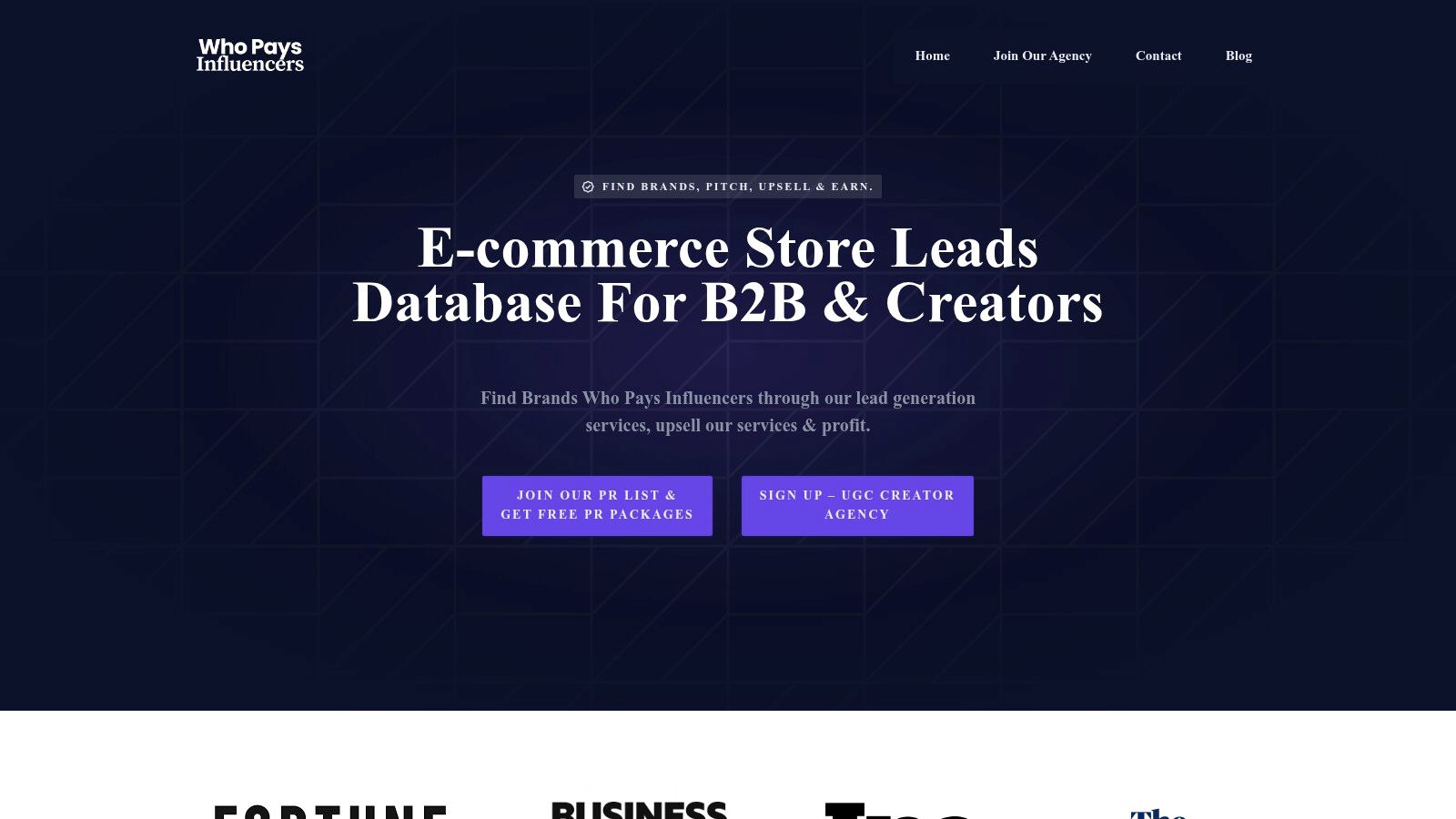
Who Pays Influencers is the closest thing on this list to a deal-flow engine instead of a simple marketplace.
Most creator platforms wait for a brand to post a brief and then push everyone into the same application pile. Who Pays Influencers works differently. It gives you lead access. That changes the job from “hope the algorithm surfaces me” to “contact the right person with the right angle.”
The platform combines an e-commerce brand leads database with a UGC creator leads database, plus PR and media lists for launches, gifting campaigns, and outreach. Members also get weekly updates, alerts for new opportunities, and practical support like scripts and pitch tracking. If you are tired of hunting for contact info, this solves the most annoying part of outreach.
Why it works for serious creators
This setup fits creators who want direct access to hiring teams instead of waiting inside a marketplace queue.
The trade-off is obvious. You still have to pitch. This is not a magic inbox-filler. Results depend on whether you can send relevant emails, follow up professionally, and track your outreach. If you want passive lead flow, this will feel like work. If you want control, it is useful.
Pricing is also accessible compared with heavier creator software. Lifetime access to creator databases starts at an affordable one-time cost, and PRPackages.io contacts are available for a low monthly fee. Cancellation is flexible.
What I like most is the ecosystem angle. The private portal ties together creator opportunities, agency-style support, and gifting workflows. That matters because many paid UGC deals start with product seeding or PR packages before they turn into retainers.
Best use case: creators who are comfortable sending direct pitches and want verified contacts instead of public listings everyone sees.
Pitch cheat sheet
When using a lead database, do not send a generic “I’m a UGC creator, let me know if you need content” email. That gets ignored.
Send a problem-solving pitch tied to the brand’s likely content bottleneck.
- Find the right contact: Prioritize creator partnerships, influencer marketing, social media, growth, PR, or e-commerce roles.
- Reference the product clearly: Mention one SKU, campaign angle, or ad style you can already picture.
- Pitch an asset, not a vague service: Offer “3 TikTok-style testimonial hooks” or “2 Amazon PDP demo videos” instead of “content creation.”
- Make usage easy: State that you can create ad-ready UGC, organic social clips, or product page content.
Mini-template:
Subject: UGC ideas for [Brand]
Hi [Name], I noticed [Brand] is pushing [product/campaign angle]. I create short-form UGC for brands that need fresh paid social and PDP creative. I’d love to send over 2 to 3 concepts specific to [specific product], especially around [demo/testimonial/use case]. If helpful, I can also share sample hooks and turnaround details.
This platform is strongest when you use it like a sales pipeline, not a directory. Build a shortlist, personalize fast, and follow up.
2. Trend
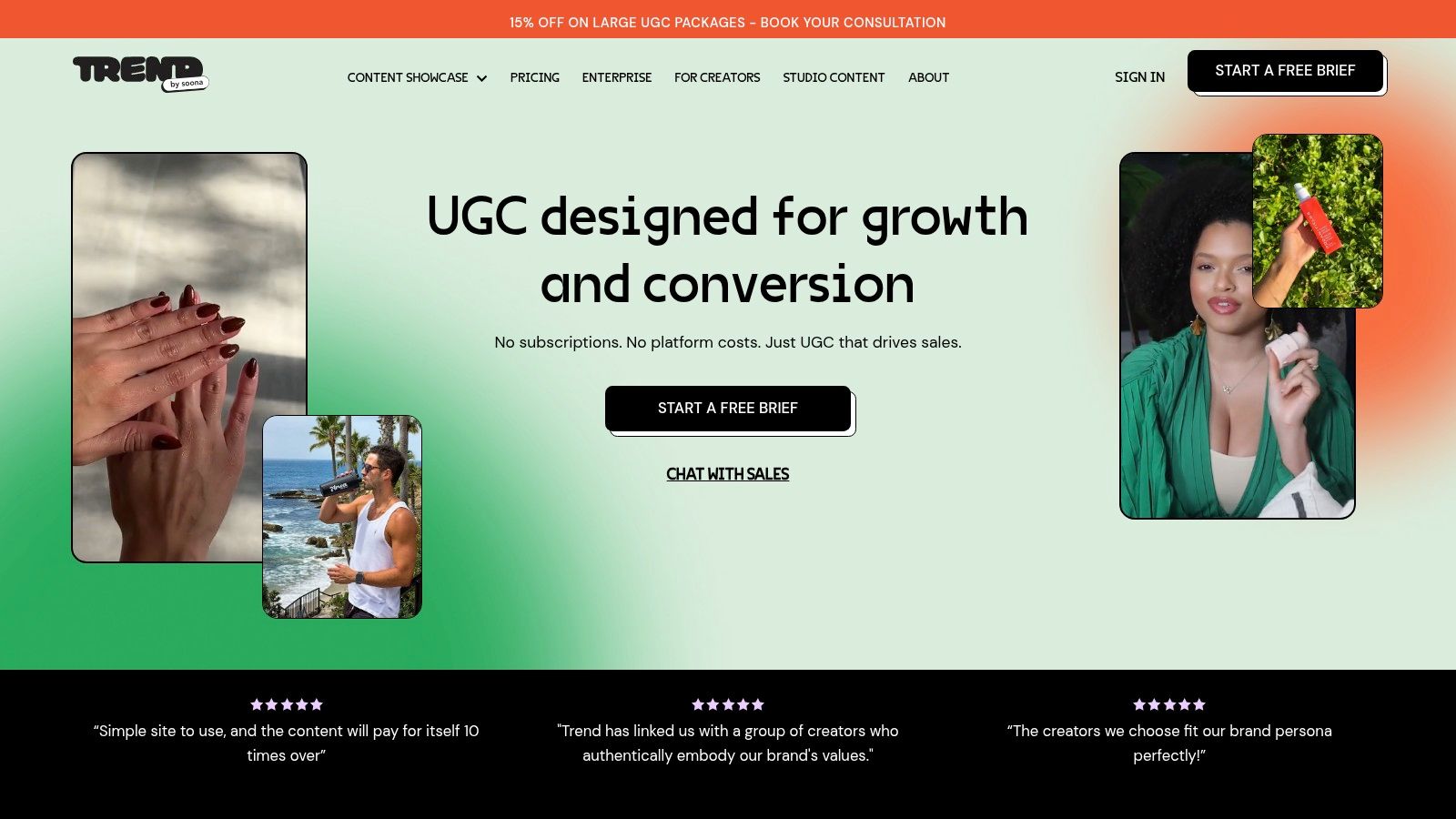
A brand needs three product videos, wants them approved fast, and does not want a long email thread about scope. Trend fits that buyer.
Trend is one of the more structured options for creators who would rather respond to a clear brief than sell from scratch. The platform is set up around standardized deliverables, which usually reduces the usual friction points: vague asks, shifting scope, and revision requests that were never discussed up front.
That structure creates a significant trade-off. Trend is strong for repeatable content production, especially for DTC brands that need product demos, simple testimonials, and clean lifestyle shots. It is weaker if your edge is strategy, scripting heavy concepts, or bigger campaign thinking. Brands using Trend are often trying to solve a production problem, not hire a creative partner.
Where the opportunities are
The best opportunities on Trend usually sit in categories that need fresh content every month, such as beauty, wellness, food, pets, and home. These brands often care less about your follower count and more about whether your samples already match the visual style they need.
Approval speed matters here.
A creator who looks easy to brief and easy to approve will usually beat a more talented creator with a messy portfolio. On Trend, that means tight thumbnails, obvious niche alignment, and samples that make the buyer think, “This person can film exactly what I need without extra hand-holding.”
Pitch cheat sheet
Trend is less about pitching a grand idea and more about removing buyer risk.
- Find the brief owner: Start with the actual listing details, then check the brand’s site and LinkedIn for creator marketing, social, or e-commerce managers if the platform gives you enough brand context.
- Match the content type exactly: If they want a product demo, lead with product demos. Do not send skits if the brief asks for conversion-focused footage.
- Show you understand constraints: Mention turnaround time, comfort following shot lists, and whether you can deliver multiple hook variations.
- Keep the message lean: One short paragraph plus a relevant portfolio link usually works better than a long intro.
Mini-template:
Hi team, I create UGC for [category] brands and have experience filming [demo/testimonial/lifestyle] assets that fit paid social and product page use. For this brief, I can deliver the style you requested with clear product handling, natural voiceover, and fast turnaround. Relevant samples: [link]
Trend works best for creators who treat applications like casting. Show fit fast, reduce friction, and make approval easy.
3. Billo
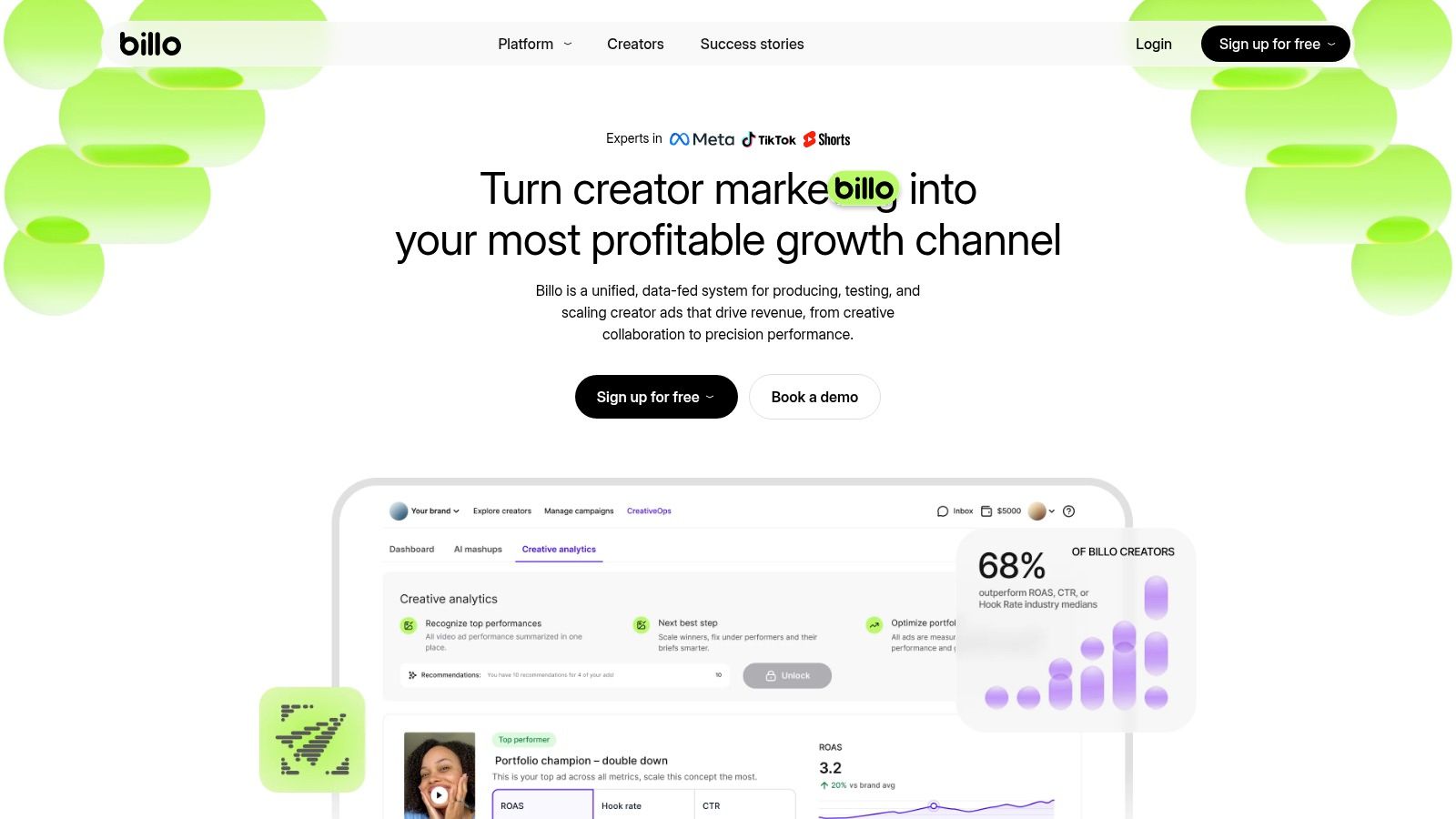
Billo is built for brands that need ad creative fast. If a company is buying media on TikTok, Meta, or other short-form placements, Billo is often closer to the buying workflow than a creator marketplace built around audience size.
That changes how creators should show up.
On Billo, the brief carries more weight than your personal brand. Brands usually are not looking for a big concept or a polished pitch deck. They want proof that you can deliver footage that editors and media buyers can put to work without a long revision cycle.
The practical upside is speed. The trade-off is that creative freedom can be tighter than on relationship-led deals. You may get clear shot requirements, messaging points, and usage expectations, then be judged on execution.
What works and what does not
Billo rewards creators who understand paid social basics. The strongest samples usually open fast, show the product early, make the benefit easy to grasp, and leave room for text overlays or alternate hooks. Clean product handling matters. So does pacing.
Creators who struggle here often post beautiful footage that says very little. A nice setup, soft lighting, and trendy editing help, but brands on Billo are usually screening for conversion potential first.
Position yourself as someone who understands paid creative in addition to filming high-quality unboxings. That one shift changes how buyers read your profile.
Pitch cheat sheet
Your profile is the pitch, but there is still strategy behind it.
- Find the brief owner: Start inside the listing. If the brand name is visible, check its website and LinkedIn for performance marketing, paid social, growth, or e-commerce managers. That gives you context on whether the ask is likely brand-led or media-buyer-led.
- Read the brief like an ad buyer: Identify the primary goal behind the request. Is the brand asking for problem-solution footage, testimonial style content, product demo clips, or hooks they can test across multiple edits?
- Show edit-friendly footage: Mention that you can deliver clean takes, clear audio, alternate hooks, and product shots with space for captions and cutdowns.
- Match the use case: If the brief sounds conversion-focused, send examples with strong proof, objection handling, or a direct CTA. If it sounds more top-of-funnel, lead with scroll-stopping hooks and broad appeal.
Strong angle: “I create direct-response UGC with clear hooks, product demonstration, and clean delivery that gives your team usable paid social footage.”
Mini-template:
Hi, I’m a fit for this brief because I create short product demo and testimonial videos designed for paid ads. I can follow your shot list closely, deliver multiple opening variations, and film clear product-use footage that is easy to edit into conversion-focused assets. Relevant samples: [link]
Billo is a strong lane for creators who treat UGC like performance creative production. The closer your samples feel to usable ad assets, the more often you get shortlisted.
4. Insense
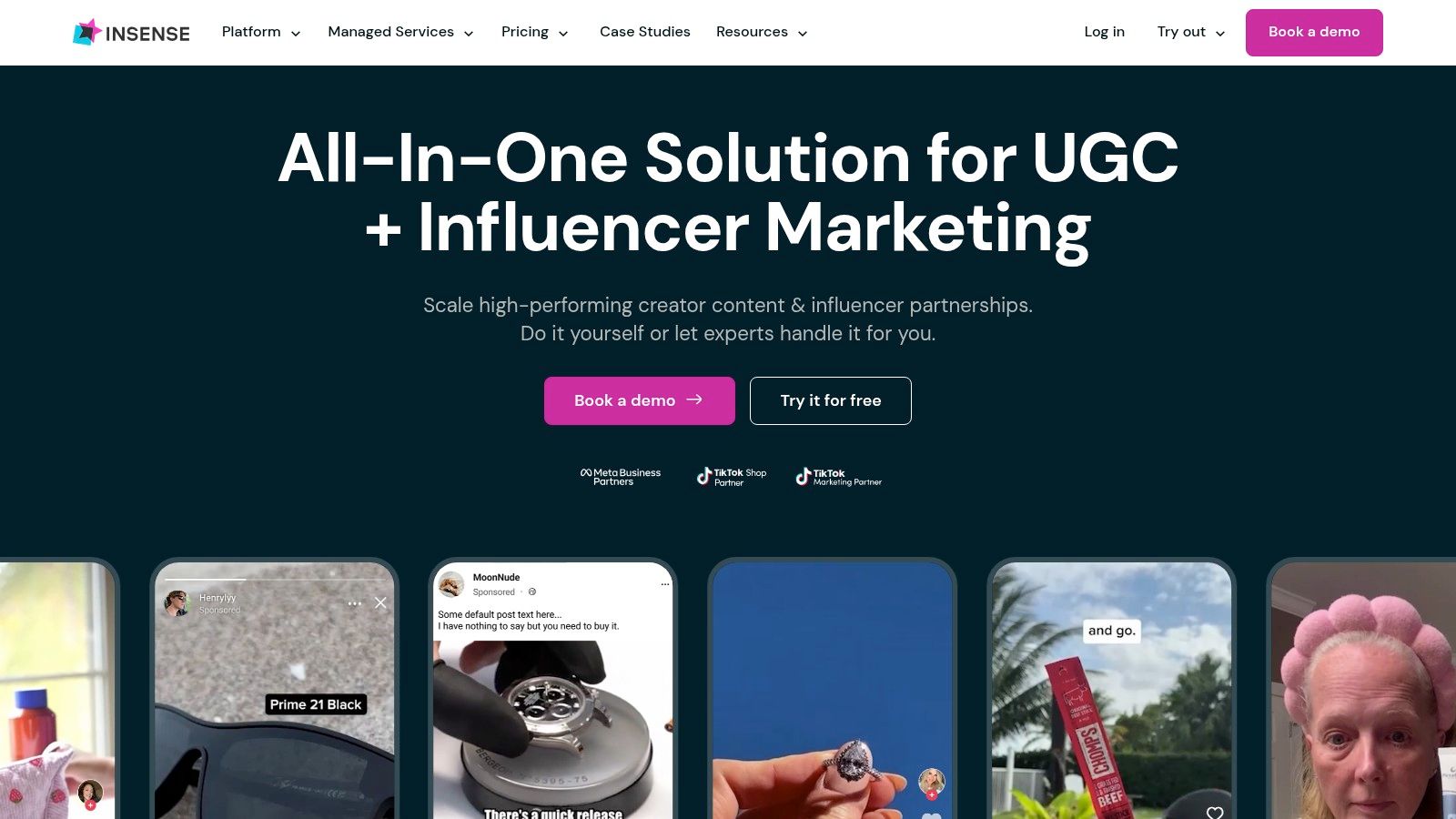
Insense is where many paid social teams go when they need creator content they can approve, license, and run. That changes the kind of creator who gets picked.
On Insense, the question is rarely just, "Can you make a nice video?" The question is whether your footage can survive legal review, brand review, and paid media testing without turning into a messy email chain about usage rights, whitelisting, or revision rounds.
That is why Insense tends to attract brands that care about process. You will see TikTok and Instagram UGC opportunities, but the primary value is operational. Rights, deliverables, and approvals are usually closer to the brief instead of being sorted out after a brand already likes your face on camera.
Best fit for creators who understand paid usage
Insense works well for creators who already think beyond posting. If a brand wants to cut your raw footage into multiple ad variants, test different hooks, or run the asset across paid placements, your pitch needs to show that you understand that workflow.
This also means the bar is a little higher. A clean portfolio helps, but platform success often comes down to whether you present yourself like someone a media buyer can trust with budget behind the content.
Insense itself positions the platform around creator collaborations for paid social and user-generated content workflows on its UGC platform pages. For creators, the practical takeaway is simple. Brands here often want assets they can reuse, not one-off social posts.
Pitch cheat sheet
Lead with how your content will be used, not just how it will look.
- Find the brief owner: If the brand is named in the listing, check LinkedIn for roles like paid social manager, growth manager, performance creative strategist, or influencer marketing manager. Insense briefs are often shaped by paid acquisition goals, even when the ask looks creator-friendly on the surface.
- Read for edit intent: If a brief requests multiple hooks, variations, or raw footage, the brand probably wants assets for testing. Say directly that you can provide alternate intros, clean b-roll, and lines delivered with space for captions or voiceover overlays.
- Address rights early: Mention whether you are comfortable with paid usage, creator licensing windows, and revision rounds. Brands using Insense usually do not want to chase this down after shortlisting.
- Match the ad angle: If the product needs education, lead with demo samples. If it needs trust, lead with testimonial or problem-solution examples. If it is visual, send footage that shows pacing, framing, and product handling clearly.
Mini-template:
Hi [Brand], I create UGC built for paid social use, with clear delivery, natural product integration, and footage your team can cut into multiple variations. I’m comfortable following structured briefs, filming alternate hooks, and working within paid usage requirements. Relevant samples: [link]
Insense rewards creators who pitch like production partners, not hobbyists waiting to be discovered.
5. Cohley
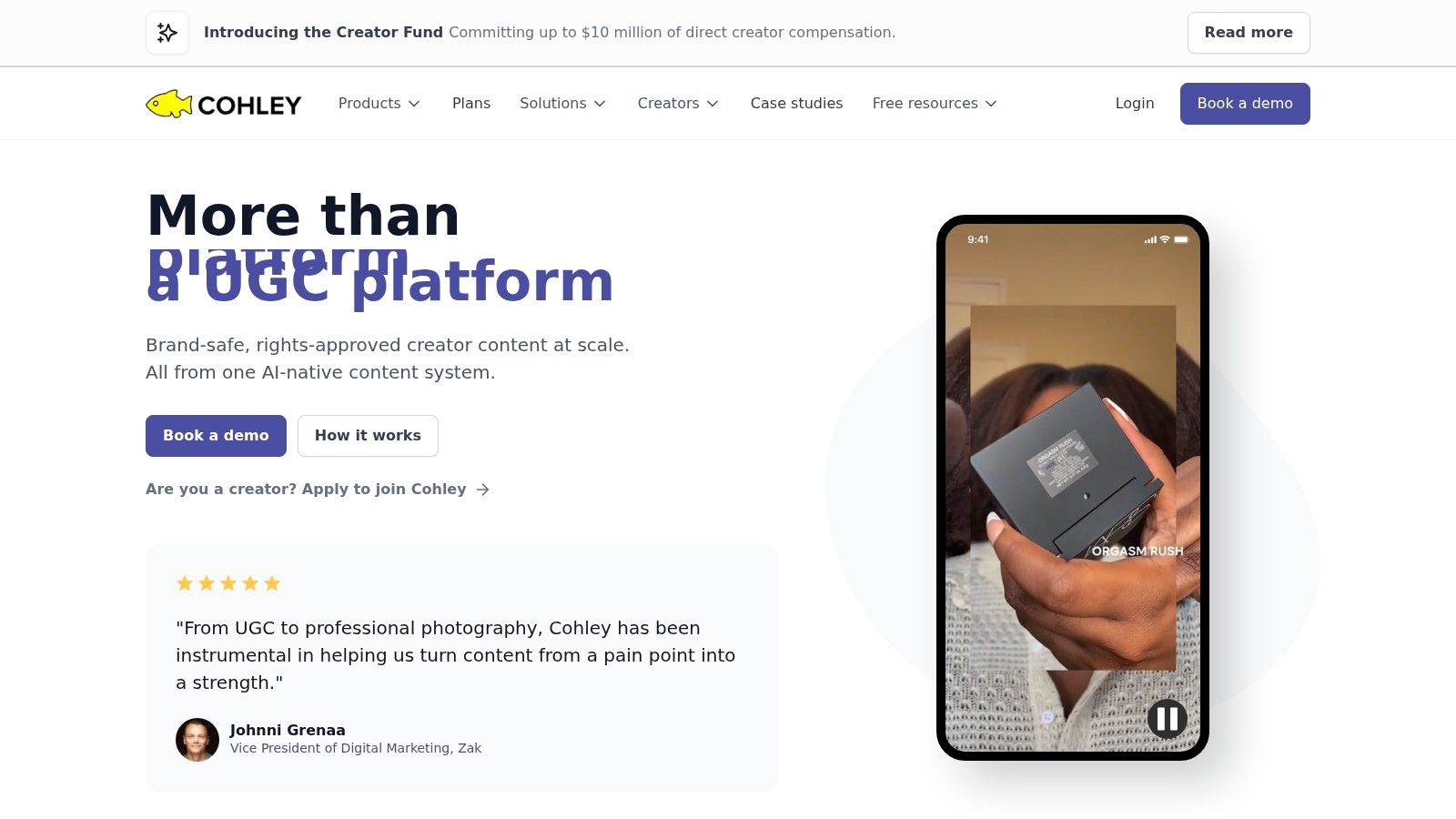
Cohley is more enterprise-focused, which is exactly why some brands prefer it. Teams using it often want one system for briefing, approvals, rights, payments, and reporting instead of stitching that process together across email, spreadsheets, and DMs.
That changes how creators should approach the platform.
Cohley tends to reward creators who look organized before the first message. Briefs are usually clearer, review steps are usually tighter, and the brand team often includes more than one stakeholder. The trade-off is speed. You get more structure, but usually less informal back-and-forth than you would with smaller brand deals.
It also covers more than quick social assets. Brands use Cohley for UGC, influencer campaigns, product reviews, and polished creative across multiple channels, which makes it a strong fit for larger retail and DTC teams managing repeat content needs.
Why bigger brands like it
Cohley fits brands that need repeatable output, clean approval trails, and content rights handled upfront. That matters for companies running paid social, PDP content, reviews, and retention creative at the same time.
As noted earlier, more brand teams now treat creator content like an ongoing production function rather than an occasional test. Platforms like Cohley exist for that reason. They help internal teams keep volume, compliance, and usage terms under control.
Pitch cheat sheet
Do not pitch Cohley listings like casual collabs. Pitch them like you can make a busy brand manager's job easier.
- Find the brief owner: If the brand name is visible, check LinkedIn for titles like influencer marketing manager, brand marketing manager, social creative manager, or content producer. Cohley briefs often pass through more than one reviewer, but these roles usually shape the ask.
- Signal process confidence: Say that you can follow structured briefs, hit deadlines, and work inside revision rounds without extra hand-holding. That matters here more than personality-heavy outreach.
- Show niche fluency: If the category has claim restrictions or product education requirements, mention that directly. Beauty, wellness, food, baby, and household brands care about clean phrasing and safe talking points.
- Send tidy samples: Choose examples with strong lighting, clear audio, and straightforward product storytelling. Cohley brands are often judging whether your footage can move cleanly through internal approvals.
If your portfolio is scattered, fix that before applying. A focused set of samples by niche and format gives enterprise teams fewer reasons to hesitate.
Mini-template:
Hi [Brand/Team], I create UGC for [category] brands and am comfortable working within structured briefs, approval rounds, and usage requirements. I deliver clear product demos, testimonial-style videos, and conversion-focused content suited for paid social, organic, and PDP use. Relevant samples: [link]. Happy to adapt to your messaging, visual guidelines, and production timeline.
Creators who win on Cohley usually present themselves as reliable operators, not just talented shooters.
6. Aspire
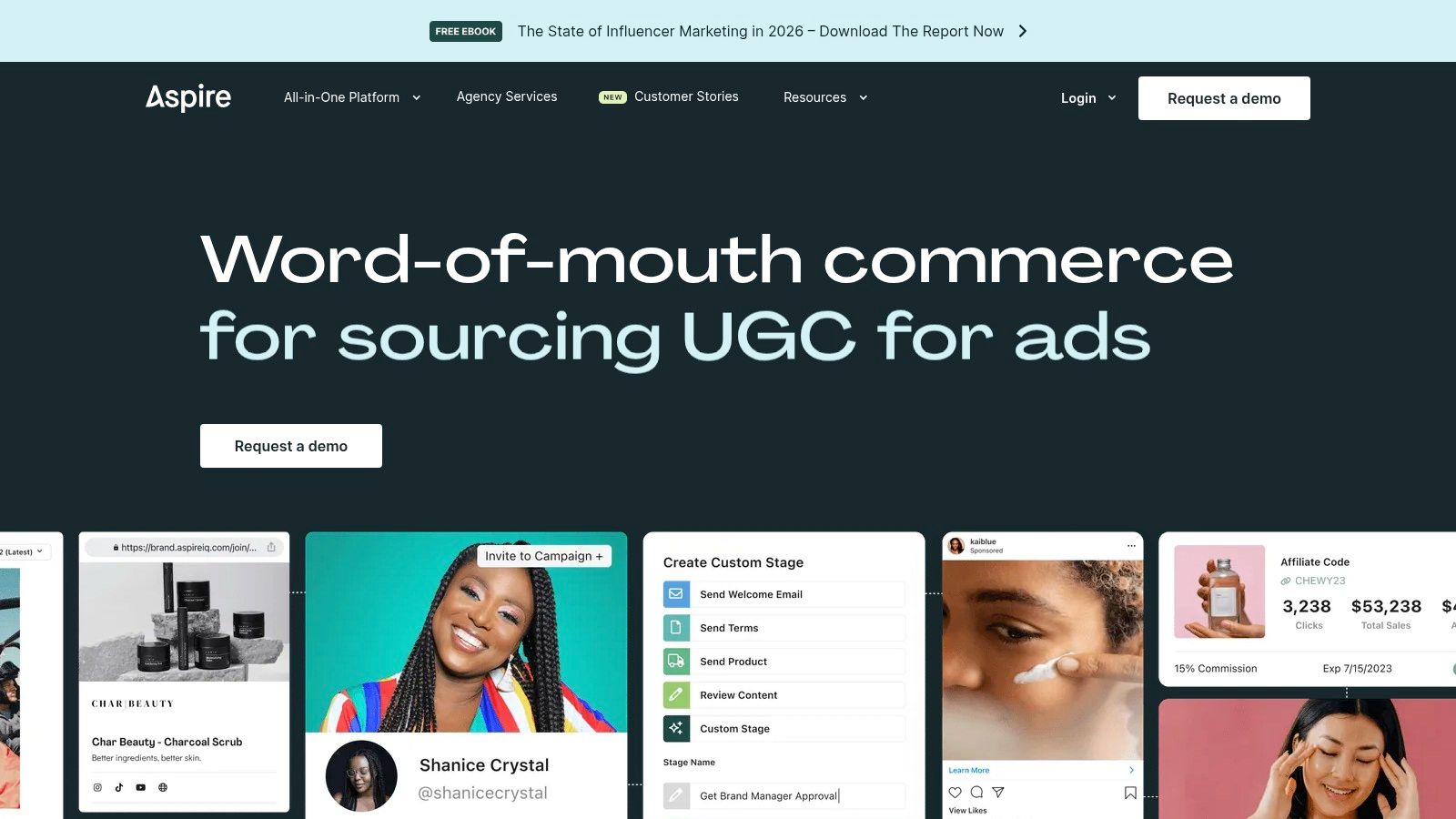
Aspire is where brands often blur the line between UGC creator, influencer, and campaign partner. A founder, brand lead, or influencer manager may come in looking for content, then favor creators who can also post, whitelist, or join a broader launch. That changes how you should present yourself.
Creators who do well here usually package themselves as easy-to-brief collaborators with a clear niche and usable content formats. Pure production-only UGC can still get picked up, but Aspire tends to reward creators who feel flexible enough for both content creation and partnership work.
The practical upside is deal flow. Brands can find you through the marketplace, send direct invites, or add you to larger outbound searches. If your profile is built well, it can work like a quiet inbound channel while you keep applying manually.
What to optimize before you apply
Aspire is profile-heavy. Brands often skim your headline, category fit, past brand work, and content examples before they read a full pitch. If those first signals are vague, you get filtered out early.
Start with positioning. “UGC creator for beauty, skincare, and supplement brands” gives a team something concrete to sort by. “Lifestyle creator” usually does not.
Then tighten your sample set. Aspire brands often want to picture where your footage will go before they message you. Include a paid-social style testimonial, a direct-response product demo, a founder-style explainer, and one clean lifestyle asset. That mix covers more buying intent than a random reel dump.
Usage awareness helps here too. If you understand raw footage delivery, hooks for testing, revision rounds, and paid usage rights, say so plainly. Brand teams on Aspire are often hiring for campaigns, not one-off posts.
Pitch cheat sheet
Treat your Aspire profile like your first pitch, then use messages to remove doubt.
- Where to find the brief: Check the campaign listing, usage notes, and deliverable requirements first. If the brand reached out directly, review its current paid ads, creator posts, and product pages before replying.
- Who is usually hiring: Influencer manager, brand manager, social lead, founder, or agency partner handling creator sourcing.
- What to emphasize: Niche fit, speed, comfort with structured deliverables, and whether you can support both UGC production and light influencer activation.
- What to avoid: Generic “I’d love to collaborate” replies. Aspire brands usually have enough creator interest already. Specificity gets the callback.
Mini-template:
Hi [Brand], I create UGC for [category] brands and can deliver content built for paid social, organic, and PDP use. My strongest formats are [demo/testimonial/problem-solution/founder-style], and I’m comfortable working from campaign briefs, usage guidelines, and testing needs. Samples: [link]. If helpful, I can also support posted content or a broader creator partnership depending on the campaign.
Aspire works best for creators who look ready to join a brand’s workflow quickly. Clean positioning beats a broad profile every time.
7. TikTok Creator Marketplace
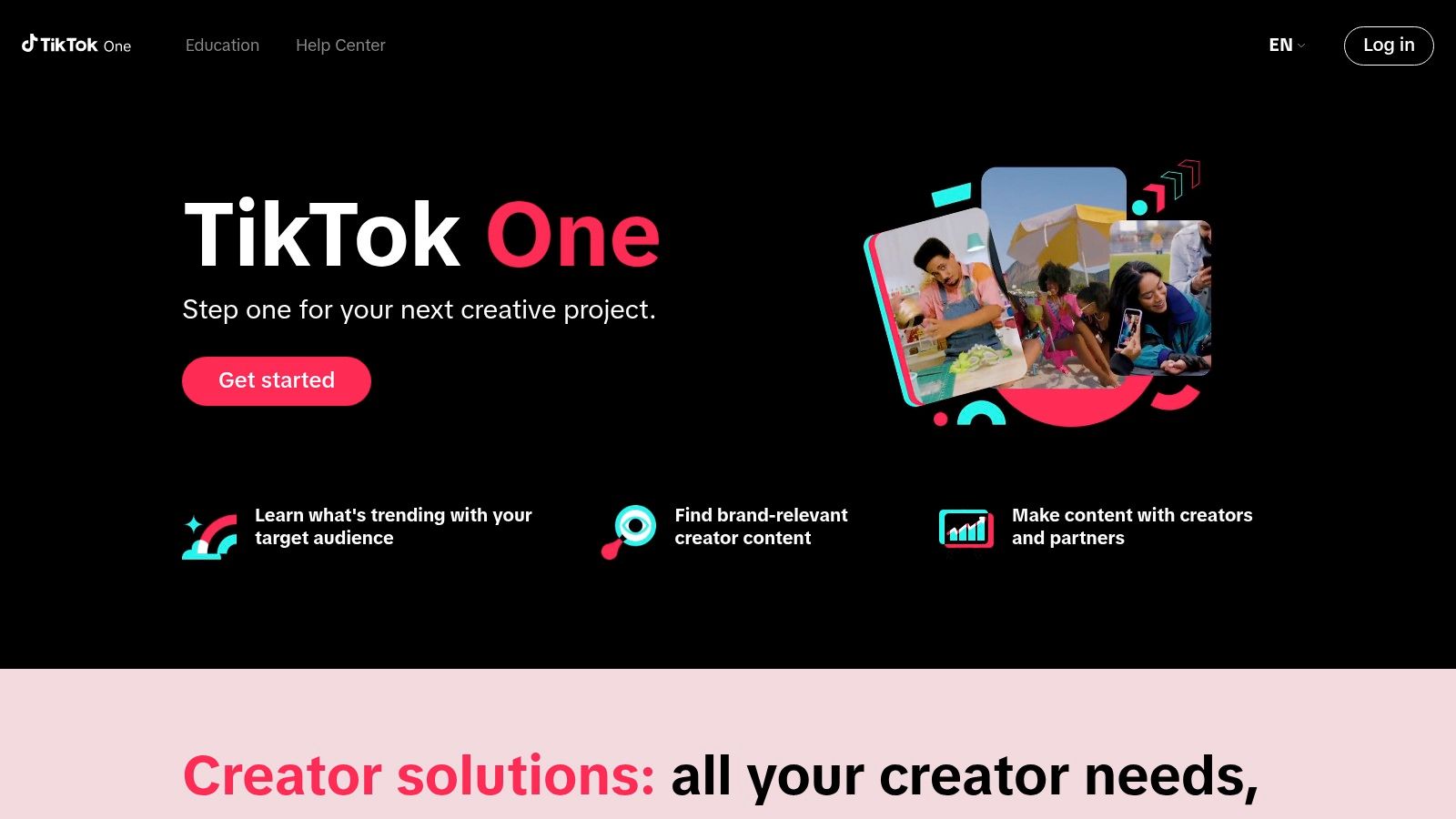
A creator gets a brief for TikTok, submits a polished vertical ad, and still loses the job. The problem usually is not video quality. It is that the concept feels produced instead of native to the feed.
TikTok Creator Marketplace works best for brands that want creator content tied closely to TikTok’s own workflow. Teams can search for creators, review profiles, manage outreach, and connect content to paid distribution inside the same ecosystem. That matters for brands running Spark Ads or trying to shorten the handoff between social and paid media.
The trade-off is fit. TCM rewards creators who understand how TikTok content earns attention. Hook timing, spoken delivery, on-screen text, pacing, and even the way a video invites comments all shape whether a brand sees your sample as usable. A clean portfolio helps, but concepts carry more weight here than polish alone.
Where it shines
TCM is strongest for creators whose work already feels like it belongs on TikTok without adjustment. Beauty, lifestyle, food, fitness, and impulse-buy products tend to perform well because the platform favors quick demonstrations, reactions, and problem-solution framing. Brands also use TCM when they want content that can move from organic-looking creator posts into paid amplification with less friction.
TikTok has said users find the platform helpful for discovering brands and products, which helps explain why brand teams keep investing in native creator content for the channel (TikTok for Business on product discovery behavior). That does not mean every creator should prioritize TCM. If your strength is highly scripted testimonial work for Meta, or if your best-performing content relies on heavy post-production, other platforms may convert better.
Pitch cheat sheet
Your pitch needs to read like a creative angle the brand can picture in-feed.
- Where to find the brief: Review the campaign page, deliverables, usage terms, and whether the brand mentions Spark Ads, whitelisting, or creator posting. Then check the brand’s recent TikTok posts and paid-style creatives to spot repeated hooks and offers.
- Who is usually hiring: Social media manager, influencer manager, creator partnerships lead, paid social manager, founder, or an agency buyer running TikTok campaigns for the brand.
- What to emphasize: First-three-second hook ideas, comfort with native TikTok pacing, product demonstration skill, and whether you can deliver content suitable for Spark Ads or dark posting.
- What to avoid: Long intros about your background, follower-count framing if you are pitching UGC production, and generic claims that your content is “engaging.” Give the brand an angle, not a slogan.
Mini-template:
Hi [Brand], I create TikTok-native UGC for [category] products and had two concepts in mind for [product]. The first is a fast [pain point] hook with direct product use in the opening seconds. The second is a [testimonial/problem-solution/day-in-the-life] format built to feel natural in-feed while still being usable for paid amplification. I’m comfortable working with usage guidelines and Spark Ads needs if that is part of the campaign. Samples: [link].
On TCM, the strongest creators make the brand’s next video easy to imagine before the first call happens.
Top 7 UGC Creator Platforms Comparison
| Platform | Implementation Complexity 🔄 | Resource Requirements ⚡ | Expected Outcomes ⭐ | Ideal Use Cases 💡 | Key Advantages 📊 |
|---|---|---|---|---|---|
| Who Pays Influencers | Low–Moderate (database + portal); requires consistent outreach | Low cost entry (one-time DB options, low monthly PR contacts) + time for pitching | Moderate (accelerates lead generation); results depend on usage consistency | Individual creators, small teams, PR/gifting campaigns, agencies seeking leads | Curated dual databases, weekly alerts, scripts & integrated gifting/agency portal |
| Trend | Low (credit-based marketplace with brief posting) | Moderate (buy credits per deliverable); no long contracts | High for short-form UGC volume and predictability | DTC brands needing steady, ad-ready UGC at predictable costs | Credit pricing, vetted creators, fast turnaround, licensing included |
| Billo | Moderate (brief → invite → approve workflow with optional editing) | Moderate (per-brief pricing); optional paid editing and matching | High for polished performance video ads | Brands focused on TikTok/Meta style performance creatives | Creator matching, expert editing, clear brief/status tracking |
| Insense | Moderate (marketplace with optional managed services for IP transfers) | Moderate–High (some pricing via sales); managed services incur extra cost | High for rights-cleared, paid-media-ready content | Brands that require clear licensing and scalable UGC reuse | Clear licensing guidance, pricing norms, scalable self-serve→managed |
| Cohley | High (enterprise end-to-end platform with compliance and analytics) | High (custom pricing); requires team resources and enterprise budget | High for large-scale, compliant multi-channel reuse | Large DTC/retail brands and agencies producing content at scale | Strong workflow, AI matching, analytics, perpetual usage rights |
| Aspire (Marketplace + Curated) | Moderate–High (full-stack with add-ons for high-volume outreach) | High (subscription plus monthly add-ons for curated invites) | High for large-volume outreach and paid partnership performance | Mid-market to enterprise needing mass outreach and influencer programs | Bulk invite tools, curated creators add-on, proven paid-media case studies |
| TikTok Creator Marketplace (TCM) | Low–Moderate (native platform workflows and discovery tools) | Variable (collaboration fees negotiated in-platform); amplification costs | High for TikTok-native reach and paid amplification | Brands prioritizing TikTok performance and Spark Ads amplification | First-party data, native campaign tools, direct amplification paths |
From List to Landed Your Next Steps
A creator signs up for three platforms, sends the same message to every brand, gets ignored, and concludes there is no work. The problem is usually not demand. The core problem is fit.
Each platform rewards a different kind of approach. Direct outreach databases reward relevance and research. Structured marketplaces reward clean applications that match the brief. TikTok Creator Marketplace rewards concepts that already sound native to the platform. Enterprise tools reward creators who look organized, reliable, and easy to brief again.
Start narrower than you think.
Pick one outreach-first channel and one marketplace. That gives you two paths to paid work. One is proactive, where you control the volume and targeting. The other is inbound, where briefs come to you if your profile and samples are strong enough. For many creators, that means using a lead source for direct pitching while staying active on one or two platforms like Billo, Trend, or TikTok Creator Marketplace.
Category choice matters too. Beauty and fashion still get attention, but they also attract the highest volume of creators. Better opportunities often show up in less crowded categories such as B2B SaaS, apps, home products, organization tools, baby gear, and parenting. The Content Creation Academy's breakdown of UGC creator niches is a useful reference here. Brands in these categories still need product demos, problem-solution hooks, testimonials, and paid social creative. They often just get fewer strong pitches.
Finally, consider your rate positioning.
Creators who present themselves as available for anything usually stay at the low end. Creators who show clear strengths, such as app tutorials, founder-style ads, skincare testimonials, or product demos for parents, have a better case for higher fees. Rate ranges vary by niche, deliverable, usage rights, and editing complexity, but the pattern is consistent. Sharper positioning, stronger samples, and better pitch quality raise your pricing faster than posting more random content.
The simplest next move is also the one many creators avoid. Tighten your portfolio. Write platform-specific pitches. Follow up. Track who replied, what they asked for, and which samples got attention.
That is how one-off applications turn into repeat clients.
If you want to skip the worst part of UGC outreach, which is digging for real contacts and guessing who is hiring, try Who Pays Influencers. It gives creators verified brand leads, weekly opportunity updates, PR contacts, and practical pitch resources so you can spend less time searching and more time landing paid collaborations.